A swap-out is not a new rental and not junk removal, you keep loading your own bin, and when it fills, Mammoth Dumpster Rental exchanges it for an empty one of the same size so the project never stalls. A 30-yard swap…
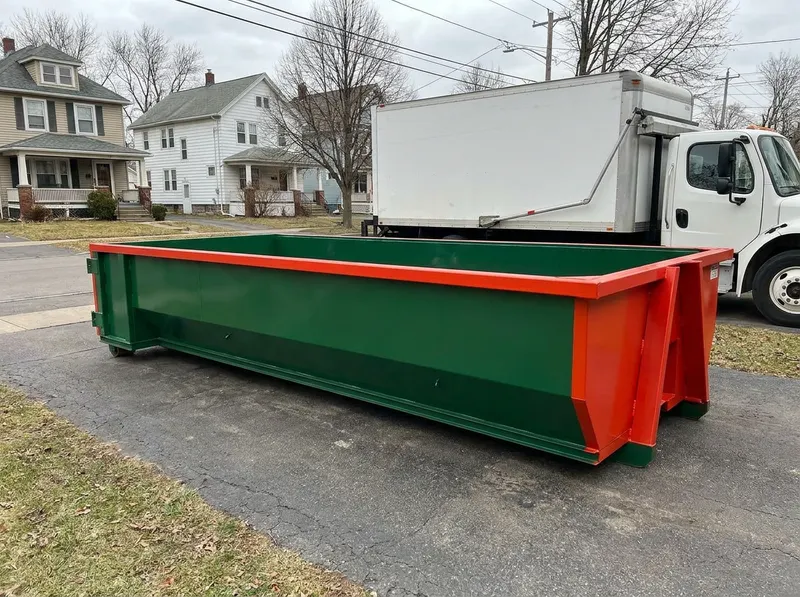
A swap-out is not a new rental and not junk removal, you keep loading your own bin, and when it fills, Mammoth Dumpster Rental exchanges it for an empty one of the same size so the project never stalls. A 30-yard swap on a South Buffalo roof tear-off, for example, is billed at $795 per swap, the same flat figure as the original drop, with the hauled load disposed at an EPA-regulated municipal landfill and no surprise weight ticket added afterward. The crucial non-obvious fact: because pricing is flat per swap, a project that fills three 20-yard bins pays three $695 swaps, $2,085 total, not a base fee plus a variable per-ton charge.
Choosing between one large bin and repeated swaps comes down to debris volume versus driveway space.
A single 40-yard bin holds roughly 16 pickup-truck loads but needs about 22 feet of clear run and overhead room, which is tight on the narrow lots of Allentown and the older streets of Kaisertown; if your driveway in Elmwood Village or North Park can only hold a 10-yard footprint, repeated 10-yard swaps at $595 each keep the bin small while still clearing the same total volume. If you are gutting a full house in University Heights or Lovejoy and have room, one 30-yard drop plus scheduled swaps is usually the smoother sequence than juggling several small bins at once.
Heavy, dense material changes the math. Roofing shingles, concrete, dirt, and brick are weight-limited by DOT axle rules, so the federal weight regulations that govern loaded trucks mean a dense load may need a swap before a bin looks visually full, a half-full 20-yard of shingles can already be at legal haul weight.
For clean roofing debris, information from the National Roofing Contractors Association and recycling options listed at Earth911 can help separate reusable material before it hits the bin. On commercial sites, crews should follow OSHA construction standards for keeping the swap zone clear.
Here is how a swap works. Step 1: call (716) 347-3573 or text a fill-level photo and confirm your bin size and Riverside, Black Rock, or Kenfield address.
Step 2: a swap time is scheduled, often same-day Monday through Saturday. Step 3: the driver hauls the full bin and sets the empty same-size bin on the identical spot. Step 4: the full load is tipped and disposed at the transfer station.
Step 5: the flat swap rate for that size is charged, nothing variable is added later.
Street placement near landmarks like Delaware Park, Canalside, or the Buffalo AKG Art Museum, and on permit-controlled streets, can require a City of Buffalo right-of-way permit; the city's municipal services pages list how right-of-way use is handled. Materials barred from every swap mirror the New York State waste guidance and the NYS Department of Environmental Conservation rules: no liquids, no refrigerant appliances until degassed, no batteries, and no household hazardous waste, which the EPA's hazardous waste resources and local drop-off programs through Erie County government cover separately. Driveway protection follows standard practice, boards under the rollers protect asphalt in Forest Lawn-area neighborhoods and older driveways.
Every job gets a firm, written price after an on-site visit.
Tell us about your dumpster swap-out service job in Buffalo and we'll send a clear, written quote, usually the same day.
 Mammoth Dumpster Rental